India is in no danger of crossing the 10 per cent threshold of food subsidies under the WTO's agreement on agriculture and it will not breach the level in the near future.


In a turn of events, India on Friday said it was "hopeful" talks for a global deal on easing Customs norms, or a trade facilitation agreement (TFA), would be revived in September, even as it failed to meet the July 31 deadline due to lack of consensus among members over food stockholding and farm subsidies.

India had proposed amending the formula to calculate the food subsidy cap of 10 per cent.
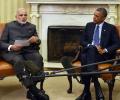
India's food security concern at WTO needs solution: Modi
WTO has released a draft text on the contentious issues of agriculture and industrial tariffs but it appears that not much headway has been made with wide differences persisting among member nations.

After India filed its complaint at the WTO in 2012, the dispute settlement panel of the body in July this year had ruled in India's favour against the USA's imposition of higher duties on New Delhi's steel imports.
Trade ministers of key WTO member countries, including India would meet on the sidelines of the Organisation for Economic Cooperation and Development meeting in Paris in the last week of May.
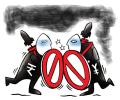
India and China have mostly set aside their bilateral differences in order to champion the cause of developing countries at the World Trade Organisation (WTO). That seems to be changing. During the latest round of China's trade policy review, India questioned its northern neighbour's claim that it was a developing country, since, going by the World Bank's definition, its per capita income belongs to that of an upper middle income country. "As per the per capita income level, the Chinese economy belongs to 'upper-middle income'. "How can China still claim to be a developing country? "What are the indicators which China is using to claim such a status?" India asked.

As India has kept out of the multilateral agreement on public procurement, it may find it tough to contest in the WTO the US state of Ohio's ban on offshore outsourcing by government departments, experts said.
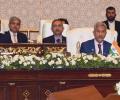
Delivering a thinly veiled message to Pakistan from its soil, External Affairs Minister S Jaishankar on Wednesday said activities across borders characterised by the 'three evils' of terrorism, extremism and separatism are unlikely to encourage trade, energy flows and connectivity.

India's Food Security Act entitles 82 crore people to 5 kg of foodgrains per person a month at Rs 1-3 per kg.

India will join a WTO panel as an 'observer' that would give the country an insight into how governments of developed countries place multi-billion procurement orders with the industry.
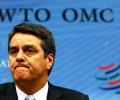
According to the final draft of the negotiating texts, seen by Business Standard, there are a few binding commitments in the chapter on TFA, under Article 13, which talks of Customs cooperation.
As expected, some WTO members have expressed immediate reservations and it looks far from certain as to whether the WTO can end up achieving anything. In fact, the very relevance of the DDR and even the WTO are now being questioned by independent observers. WTO Director General Pascal Lamy was hopeful the negotiating texts clearly indicate where convergence lies among the WTO members and that the documents provide a springboard for a new and critical stage.
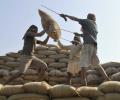
New Delhi to push for services trade facilitation & food stockpiling.
Success of the Ministerial meeting depends on the WTO members putting together the broad contours of a deal by August.
The first global trade reform since the creation of the World Trade Organization is ready for agreement by ministers from the body's 159 member countries later on Friday, sources involved in the talks said.
India is threatening to block the World Trade Organization (WTO)'s trade facilitation agreement (TFA) reached at Bali last year unless its agricultural policies are permanently excluded from multilateral scrutiny.
India has said it is committed to working for a successful conclusion of Doha round of World Trade Organisation talks despite the setbacks witnessed in the recent months.
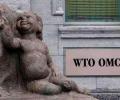
India has expressed its disappointment over non-reaffirmation to conclude 14-year-old Doha Round pacts

The Doha Round of talks of the World Trade Organisation (WTO) faces a new challenge and if some statements emanating after the General Council meeting on July 25 at Geneva are to be taken at face value, this could derail the process of trade liberalisation through a multilateral route for some time.
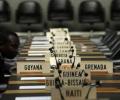
The study paper by Melbourne-based think-tank Australia India Institute titled 'The G20: Challenges and opportunities Ahead', said following Prime Minister Narendra Modi's visit to the US and his talks with US President Barack Obama, India may finally sign the agreement.
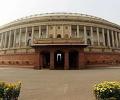
Rajya Sabha was adjourned twice during Question Hour on Monday as the Congress created uproar saying there were inconsistencies in government statements on the World Trade Organisation though Finance Minister Arun Jaitley asserted there was no contradiction.

The November 26 meeting, the first of its kind, will also take up trade facilitation agreement.

This comes in the backdrop of the circulation of new draft negotiating texts last week by the WTO on agriculture, industrial goods and sectorals.

The 10th ministerial conference, will be held at Nairobi, Kenya.
The secretariat of the Geneva-based global trade body planned to increase Lamy's annual pay by 20 to 30 per cent from around 500,000 Swiss francs ($468,000) at present and proposed the raise at an informal committee meeting in early July to discuss budgetary and other issues, Kyodo news agency quoted trade sources as saying.
India is not convinced that the new texts on agriculture and non-agricultural market access released by the World Trade Organization last Saturday would lead to consensus among members, though some of its concerns have been addressed with caveats.
Indian elections and subsequent political developments have come as a glitch to the process of evolving a new proposal on the contentious farm sector negotiations at the World Trade Organisation.
Emphasising on greater transparency at the World Trade Organisation, both India and China have said no last minute surprises should be sprung on negotiators.
The quota regime in textiles and clothing is unlikely to be extended beyond the deadline of 2005, a senior World Trade Organisation official said on Tuesday.
Chairperson of the negotiating group on agriculture David Walker has announced a schedule for negotiations for the next few weeks, before the summer break in August and early September. India's commerce and industry minister Anand Sharma had said in Washington last week that New Delhi is ready for 'give and take' without being 'frozen in pre-negotiating position' in the interest of global trade.
The Indian government has demanded that the year be changed to a more recent period, taking into consideration the rise in food prices and rate of inflation.
 © 2026 Rediff.com - Advertise with us - Disclaimer - Privacy Policy - Sitemap - Feedback - About us - Terms of use - Grievances